

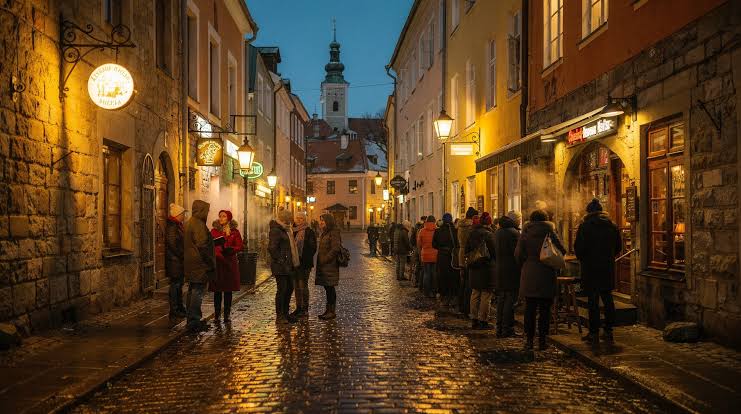
Estonia’s nightlife today reflects a mixture of local traditions, modern European influences and a rapidly changing urban culture.
Tallinn in particular has developed a varied evening scene that includes traditional pubs, contemporary bars, live music venues, clubs and cultural events.
Understanding that background helps explain why nightlife can feel both modern and distinctly Estonian.
From Traditional Socialising to Modern Venues
Historically, social life in Estonia was closely connected with community gatherings, cafés, restaurants and cultural events.
As Tallinn developed into an increasingly international capital, its nightlife became more diverse.
Today, visitors can find venues aimed at different interests and age groups.
Tallinn Leads the Scene
Tallinn is the country’s main nightlife centre.
Its Old Town has long attracted visitors, while areas such as Kalamaja have developed their own cafés, restaurants, bars and cultural spaces.
This creates several different nightlife styles within a relatively compact city.
You can have a quiet drink, attend a concert and visit a nightclub without travelling huge distances.
Music Has Played an Important Role
Live music and cultural performance remain important parts of social life.
Estonia has a strong musical identity, most famously associated with its choral traditions and large song celebrations.
The Song Festival is one of the country’s best known cultural events and demonstrates how strongly music can connect communities.
Modern nightlife adds another layer through DJs, bands and smaller performances.
Digital Culture Changed Socialising
Estonia is one of Europe’s highly digital societies.
Statistics Estonia reported that 92.9% of households had internet access in 2024.
Digital technology affects how people discover restaurants, buy tickets, communicate with friends and organise evenings.
A visitor can find an event, check its schedule and plan transport before leaving the hotel.
Nightlife Is Not Just Clubs
This is worth remembering.
Modern Estonian nightlife includes:
- Cafés
- Restaurants
- Concerts
- Art events
- Pubs
- Clubs
- Cultural festivals
- Late night food
That variety makes the scene accessible to people who do not enjoy traditional clubbing.
Changing Social Habits
Younger generations may socialise differently from older residents.
Some prefer electronic music and late night venues, while others enjoy quieter bars, cultural events or restaurants.
There is no single Estonian nightlife personality.
Individual preference still matters.
Tourism Has an Influence
Tallinn receives visitors from across Europe and beyond.
Tourists bring different expectations, spending habits and nightlife traditions.
Local businesses have responded by offering more varied experiences.
At the same time, visitors are expected to respect local rules and residents.
A Living Culture
Nightlife is not separate from everyday life.
It reflects changing music tastes, technology, tourism, food culture and social habits.
That is why Estonia’s modern nightlife can feel both familiar and different to visitors.
The practical way to experience it is not to search for one “typical” Estonian night.
Try different environments.
Have coffee. Listen to live music. Walk through the Old Town. Visit a local event. If you enjoy dancing, try a club.
That gives you a much better picture of modern Estonian social culture than spending the entire evening in one type of venue.
The street smart approach is to stay open minded while remembering that nightlife is part of a living community, not simply a tourist attraction.